
What are the Safety Standards for Swimming Goggles?
What are the Safety Standards for Swimming Goggles?
When discussing safety standards for swimming goggles, the primary global benchmark is ISO 18527-3:2020 (which replaced the older British Standard BS 5883:1996). These standards ensure that the goggles protect your eyes rather than becoming a hazard themselves.
Here are the key safety standards broken down into four main categories:
- Mechanical Strength (Impact Resistance)
The most critical safety feature is ensuring the goggles won't shatter into the eye if hit (by a hand, a lane rope, or the pool wall).- Drop-Ball Test: Lenses must withstand the impact of a steel ball dropped from a specific height without fracturing or detaching from the frame.
- Shatterproof Materials: Most safety-compliant goggles use polycarbonate lenses because they are naturally impact-resistant and do not splinter into sharp shards.
- Optical Quality and Clarity
Goggles must not distort your vision, as poor optics can lead to headaches, dizziness, or misjudging distances.- Refractive Power: Lenses must have near-zero refractive power (unless they are prescription) to ensure objects underwater appear where they actually are.
- Luminous Transmittance (Tints): ISO 18527-3 classifies goggles into five categories (SW0 to SW4):
- SW0 (Clear): For indoor/low light.
- SW3–SW4 (Dark/Mirrored): Must block enough light for bright outdoor sun but still allow enough visibility to see underwater obstacles.
- UV Protection: Standards check if the lenses effectively filter out harmful UVA and UVB rays, especially for goggles intended for outdoor or open-water use.
- Construction and Materials
The materials that touch your skin must be safe and the physical build must be "user-friendly."- Non-Toxic Materials: The seals (gaskets) and straps must be made of hypoallergenic materials (like medical-grade silicone or TPE) to prevent skin irritation.
- No Sharp Edges: All components must be rounded or smoothed. There should be no exposed edges with a radius of less than 2mm that could cut the skin.
- Suction & Pressure: The design must ensure that the "suction" required to keep water out does not apply excessive, dangerous pressure to the eyeball.
- Leakage and Secure Fit
- Water Seal Test: Goggles are tested on standard "head forms" to ensure they remain watertight during normal swimming movements.
- Strap Security: The head strap must be strong enough not to snap under tension and must have a slip-resistance mechanism so it doesn't loosen during a dive or turn.
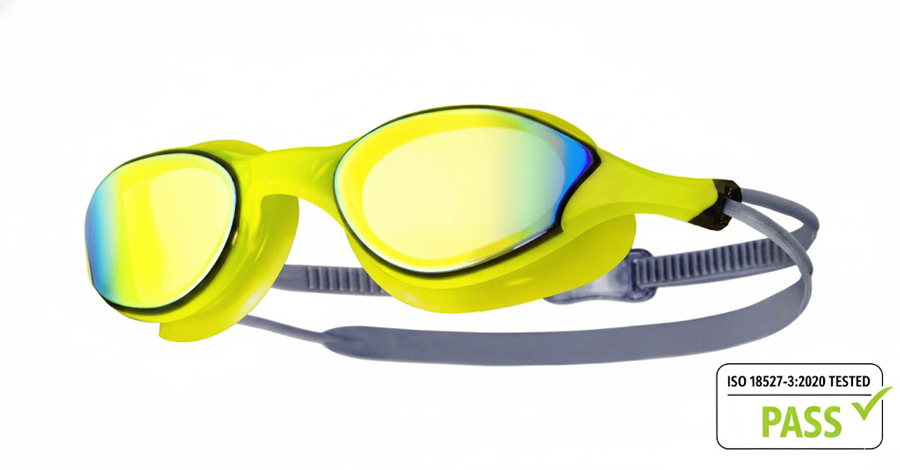
Pro-Tip: When buying goggles, look for the "ISO 18527-3" or "CE" mark on the packaging. This is your guarantee that the product has passed these rigorous safety tests.
"The entire range of swimming goggles from First Rank Co., Ltd. (SAEKO) conforms to ISO 18527-3:2020."